110 facts · Every claim links to the primary source
110 Mount Rushmore Facts
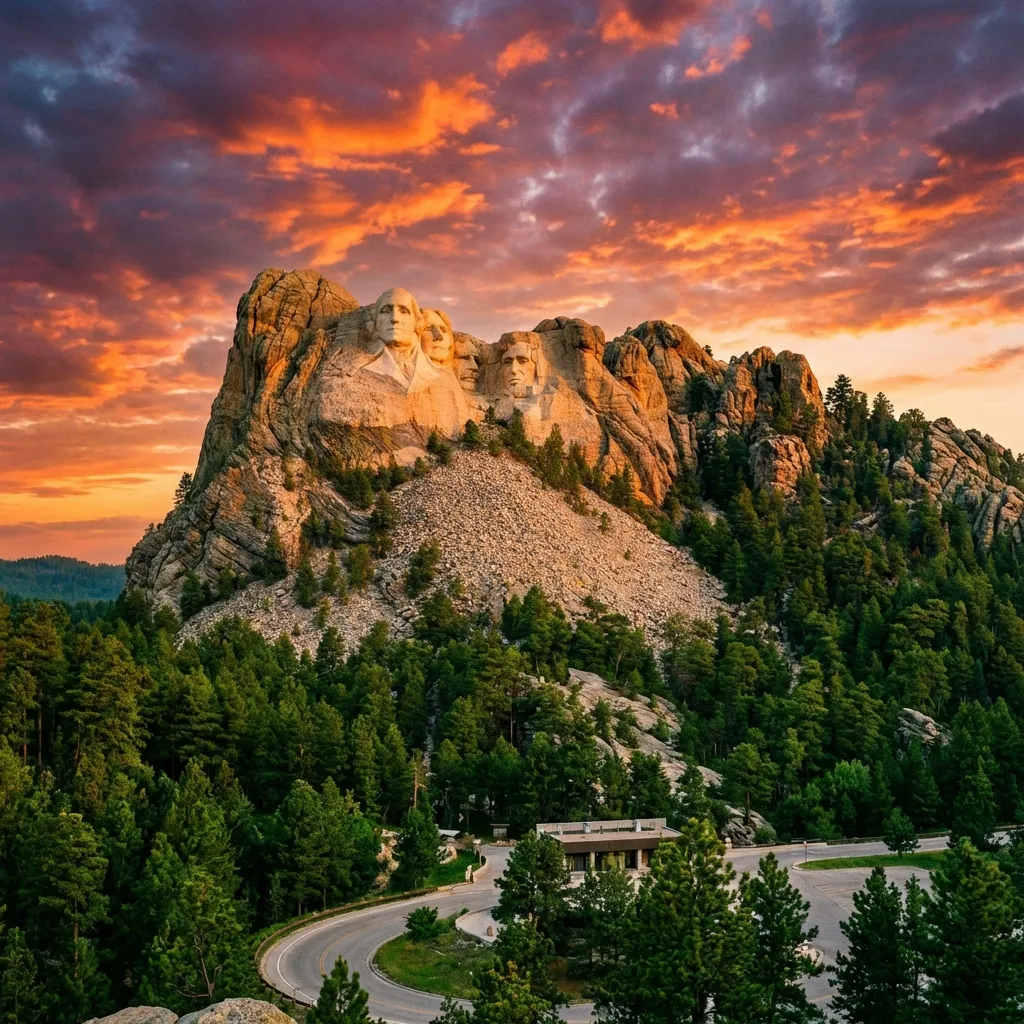
A citation-ready reference on the memorial's history, colossal scale, construction, cultural context and visitor record, written for journalists, students and anyone who wants the source behind the fact.
Updated: September 14, 2026 | Primary-source review completed
60 ft
Washington’s head
14 years
Carving period
0
Carving fatalities
1.85m
2024 recreation visits
A sourceable Mount Rushmore reference
These are not recycled trivia snippets. Each fact below points directly to a National Park Service page or report, so an editor can check the original context before citing it. The page separates official recreation visits from unique visitors, distinguishes historical records from current visitor information, and does not treat a changing parking policy as an evergreen fact.
Quick answer: Mount Rushmore was carved from 1927 to 1941 by nearly 400 workers. George Washington's head is 60 feet tall, no worker died during the project, and the National Park Service counted 1,850,329 recreation visits in 2024.
Origins & Timeline (17)
How a South Dakota tourism idea became a national memorial.
- 1
State historian Doane Robinson proposed a Black Hills sculpture on December 28, 1923. Source: Mount Rushmore Timeline
- 2
Congress authorized a carving in Harney National Forest on March 3, 1925. Source: Mount Rushmore Timeline
- 3
South Dakota authorized a carving on Custer State Park land on March 5, 1925. Source: Mount Rushmore Timeline
- 4
Mount Rushmore was dedicated as a national memorial in a flag ceremony on October 1, 1925. Source: Mount Rushmore Timeline
- 5
President Calvin Coolidge handed Gutzon Borglum a set of drill bits at the first ceremonial drilling on August 10, 1927. Source: Mount Rushmore Timeline
- 6
The first actual carving began on October 4, 1927. Source: Mount Rushmore Timeline
- 7
The George Washington figure was dedicated on July 4, 1930. Source: Mount Rushmore Timeline
- 8
The Thomas Jefferson figure was dedicated on August 30, 1936, with President Franklin D. Roosevelt attending. Source: Mount Rushmore Timeline
- 9
The Abraham Lincoln figure was dedicated on September 17, 1937. Source: Mount Rushmore Timeline
- 10
The Theodore Roosevelt figure was dedicated on July 2, 1939. Source: Mount Rushmore Timeline
- 11
Gutzon Borglum died in Chicago on March 6, 1941, before the project was finished. Source: Mount Rushmore Timeline
- 12
The final drilling was completed under Lincoln Borglum on October 31, 1941. Source: Mount Rushmore Timeline
- 13
The carving period ran for 14 years, from 1927 through 1941. Source: Mount Rushmore Carving History
- 14
The National Park Service has been the memorial’s steward since 1933. Source: Foundation Document Overview
- 15
Congress declared the sculpture complete in October 1941. Source: Foundation Document Overview
- 16
The project cost $989,992.32 in total. Source: Mount Rushmore Student Guide
- 17
The original Mount Rushmore project included a giant mountaintop inscription and a Hall of Records, neither of which was fully realized. Source: Foundation Document Overview
Carving & Construction (16)
The people, tools and work behind the granite faces.
- 1
Nearly 400 men and women worked on Mount Rushmore. Source: Mount Rushmore Carving History
- 2
No worker died during the 14-year carving project. Source: Mount Rushmore Carving History
- 3
About 90% of the mountain was carved with dynamite. Source: Mount Rushmore Carving History
- 4
Workers climbed 700 stairs to the top of the mountain before clocking in each day. Source: Mount Rushmore Carving History
- 5
Drillers were lowered over the face in bosun chairs on 3/8-inch steel cables. Source: Mount Rushmore Carving History
- 6
The workers operated across a 500-foot mountain face. Source: Mount Rushmore Carving History
- 7
Powdermen sized dynamite charges to remove precise amounts of granite. Source: Mount Rushmore Carving History
- 8
Dynamite work stopped when only three to six inches of rock remained before the final carving surface. Source: Mount Rushmore Carving History
- 9
Workers used closely spaced drill holes, a process called honeycombing, to weaken the final layer of granite. Source: Mount Rushmore Carving History
- 10
A hand facer or bumper tool gave the finished faces their smooth surface. Source: Mount Rushmore Carving History
- 11
Call boys stationed at the edge of the mountain relayed safety messages during the blasting work. Source: Mount Rushmore Carving History
- 12
The workforce included drillers, blacksmiths, call boys and housekeepers, among other jobs. Source: Mount Rushmore Carving History
- 13
One worker recalled earning $8 per day during the carving era. Source: Mount Rushmore Carving History
- 14
Borglum’s working model used a 1:12 scale: one inch on the model represented one foot on the mountain. Source: Mount Rushmore Student Guide
- 15
About 450,000 tons of blasted rock form the talus slope below the sculpture. Source: Talus Terrace
- 16
The final Hall of Records work consists of a finished doorway leading to a rough-cut hallway inside the mountain. Source: Foundation Document Overview
Scale & Geology (14)
Dimensions, acres and the unusually old rock beneath the memorial.
- 1
Mount Rushmore depicts four U.S. presidents: George Washington, Thomas Jefferson, Abraham Lincoln and Theodore Roosevelt. Source: Foundation Document Overview
- 2
George Washington’s carved head is 60 feet tall. Source: How Big Are the Heads?
- 3
George Washington’s nose is 21 feet long. Source: How Big Are the Heads?
- 4
Each carved eye is about 11 feet wide. Source: How Big Are the Heads?
- 5
Each carved mouth is about 18 feet wide. Source: How Big Are the Heads?
- 6
Mount Rushmore National Memorial protects 1,278.45 acres. Source: Park Statistics
- 7
The memorial is in the central Black Hills, two miles southwest of Keystone, South Dakota. Source: Foundation Document Overview
- 8
State Highway 244 is also known as the Gutzon Borglum Memorial Highway at Mount Rushmore. Source: Foundation Document Overview
- 9
The top of Mount Rushmore is 5,725 feet above sea level. Source: Mount Rushmore Student Guide
- 10
The sculpture was carved into granite selected by Borglum for its expected durability. Source: Foundation Document Overview
- 11
The granite forming the Black Hills’ crystalline core cooled underground about 1.6 billion years ago. Source: Geologic Activity
- 12
The original sediments that became the area’s metamorphic rocks are estimated to be 1.6 to 2.5 billion years old. Source: Geologic Activity
- 13
The Black Hills uplift developed largely during the Laramide Orogeny, roughly 60 to 50 million years ago. Source: Geologic Activity
- 14
The broader Black Hills uplift covers about two million acres along the South Dakota–Wyoming border. Source: Geologic Activity
Presidents, Meaning & Context (13)
Why these four figures were selected and the larger place they occupy.
- 1
Washington was chosen to represent the founding of the United States. Source: Why These Four Presidents?
- 2
Jefferson was chosen to represent the nation’s growth, including the Louisiana Purchase. Source: Why These Four Presidents?
- 3
Lincoln was chosen to represent preservation of the Union. Source: Why These Four Presidents?
- 4
Theodore Roosevelt was chosen to represent the country’s development in the early 20th century. Source: Why These Four Presidents?
- 5
The memorial’s stated purpose is to communicate the founding, expansion, preservation and unification of the United States. Source: Foundation Document Overview
- 6
The four presidents were intended to represent the first 150 years of U.S. history. Source: Foundation Document Overview
- 7
Mount Rushmore’s foundation document calls the sculpture an engineering and artistic achievement of the Depression era. Source: Foundation Document Overview
- 8
The same document identifies the memorial as a cultural and natural landscape of granite walls, spires and ponderosa pine forest. Source: Foundation Document Overview
- 9
The Black Hills are considered sacred and important to many tribes, according to the National Park Service. Source: Foundation Document Overview
- 10
The foundation document says the carving materially changed the natural landscape. Source: Foundation Document Overview
- 11
The memorial contains large stands of old-growth ponderosa pine, historic buildings, archaeological sites, streams and wetlands. Source: Foundation Document Overview
- 12
National Park Service planning identifies five different biomes within the memorial’s natural and cultural setting. Source: Foundation Document Overview
- 13
The carving helped stimulate the Black Hills economy and contributed to South Dakota tourism, according to the memorial’s foundation document. Source: Foundation Document Overview
25 Years of Visitation (25)
A sourceable annual record of recreation visits, not estimates of unique people.
- 1
Mount Rushmore recorded 1,868,876 recreation visits in 2000. Source: Park Statistics
- 2
Mount Rushmore recorded 1,904,119 recreation visits in 2001. Source: Park Statistics
- 3
Mount Rushmore recorded 2,162,570 recreation visits in 2002. Source: Park Statistics
- 4
Mount Rushmore recorded 2,217,894 recreation visits in 2003. Source: Park Statistics
- 5
Mount Rushmore recorded 2,037,820 recreation visits in 2004. Source: Park Statistics
- 6
Mount Rushmore recorded 2,037,861 recreation visits in 2005. Source: Park Statistics
- 7
Mount Rushmore recorded 1,989,771 recreation visits in 2006. Source: Park Statistics
- 8
Mount Rushmore recorded 1,856,118 recreation visits in 2007. Source: Park Statistics
- 9
Mount Rushmore recorded 1,789,328 recreation visits in 2008. Source: Park Statistics
- 10
Mount Rushmore recorded 2,260,192 recreation visits in 2009. Source: Park Statistics
- 11
Mount Rushmore recorded 2,331,237 recreation visits in 2010. Source: Park Statistics
- 12
Mount Rushmore recorded 2,081,722 recreation visits in 2011. Source: Park Statistics
- 13
Mount Rushmore recorded 2,185,447 recreation visits in 2012. Source: Park Statistics
- 14
Mount Rushmore recorded 2,162,998 recreation visits in 2013. Source: Park Statistics
- 15
Mount Rushmore recorded 2,144,808 recreation visits in 2014. Source: Park Statistics
- 16
Mount Rushmore recorded 2,434,297 recreation visits in 2015. Source: Park Statistics
- 17
Mount Rushmore recorded 2,431,231 recreation visits in 2016. Source: Park Statistics
- 18
Mount Rushmore recorded 2,437,800 recreation visits in 2017. Source: Park Statistics
- 19
Mount Rushmore recorded 2,311,273 recreation visits in 2018. Source: Park Statistics
- 20
Mount Rushmore recorded 1,963,540 recreation visits in 2019. Source: Park Statistics
- 21
Mount Rushmore recorded 2,074,986 recreation visits in 2020. Source: Park Statistics
- 22
Mount Rushmore recorded 2,525,868 recreation visits in 2021. Source: Park Statistics
- 23
Mount Rushmore recorded 2,440,449 recreation visits in 2022. Source: Park Statistics
- 24
Mount Rushmore recorded 2,431,195 recreation visits in 2023. Source: Park Statistics
- 25
Mount Rushmore recorded 1,850,329 recreation visits in 2024. Source: Park Statistics
The Memorial Today (25)
Visitor access, preservation and the landscape surrounding the carving.
- 1
Mount Rushmore’s visitor facilities are open year-round, seven days a week, except December 25. Source: Operating Hours & Seasons
- 2
Mount Rushmore National Memorial does not charge an entrance fee. Source: Mount Rushmore Parking
- 3
The parking facility operates under a concession contract between the National Park Service and Xanterra Travel Collection. Source: Mount Rushmore Parking
- 4
The Presidential Trail is a 0.6-mile walking loop with multiple viewing angles of the sculpture. Source: Presidential Trail
- 5
The Sculptor’s Studio is normally open from late May through September 30, subject to weather and staffing. Source: Sculptor’s Studio
- 6
The memorial’s 1998 core-area redevelopment was designed in part to reduce crowding effects. Source: Foundation Document Overview
- 7
After the redevelopment, the average visitor stay grew from less than one hour to more than two hours, according to the foundation document. Source: Foundation Document Overview
- 8
Most visitors come to see the carved mountain and its associated visitor facilities. Source: Foundation Document Overview
- 9
The site’s visitor count has exceeded two million in recent years, according to the National Park Service. Source: Foundation Document Overview
- 10
National Park Service staff rappel over the faces to inspect and caulk cracks and fissures. Source: Mount Rushmore Student Guide
- 11
The sealant used on Mount Rushmore keeps moisture, ice and snow out of cracks that could otherwise damage the sculpture. Source: Mount Rushmore Student Guide
- 12
Mount Rushmore was named in 1885 for New York attorney Charles E. Rushmore. Source: Mount Rushmore Student Guide
- 13
The National Park Service lists 13000 SD-244, Keystone, South Dakota, as the memorial’s street address. Source: Basic Information
- 14
The memorial’s setting combines massive granite outcrops with ponderosa pine forest. Source: Foundation Document Overview
- 15
The memorial documents human habitation and development in the Black Hills over thousands of years. Source: Foundation Document Overview
- 16
The National Park Service describes Mount Rushmore as an internationally recognized symbol of freedom and democracy. Source: Foundation Document Overview
- 17
The monument’s workers endured conditions ranging from blazing heat to bitter cold and wind. Source: Mount Rushmore Carving History
- 18
The memorial’s granite rock was formed underground before erosion exposed it at the surface. Source: Geologic Activity
- 19
The site includes flora and fauna as well as cultural resources, not only the presidential sculpture. Source: Foundation Document Overview
- 20
The memorial’s amphitheater is both a viewpoint for the sculpture and a setting for interpretation. Source: Foundation Document Overview
- 21
The 1998 redevelopment changed visitor patterns as well as the core area’s physical layout. Source: Foundation Document Overview
- 22
The National Park Service describes the memorial as a place where people can contemplate patriotism and the American experience. Source: Foundation Document Overview
- 23
Mount Rushmore’s foundation document identifies the project as a result of partnerships that continue to support the memorial. Source: Foundation Document Overview
- 24
The memorial’s original land was set aside in 1925 before Congress began funding work in 1927. Source: Foundation Document Overview
- 25
Lincoln Borglum became the memorial’s first superintendent after the sculpture was declared complete. Source: Foundation Document Overview
Methodology & update policy
This page cites first-party National Park Service material only. The 25-year table uses NPS recreation visits, a standard administrative metric that should not be described as unique people. We will review historical material annually and update the visitation section when NPS publishes a new full-year figure. A date change means the sources or facts were actually reviewed.
Frequently asked questions
How many facts are on this page?
This resource contains 110 individually sourced Mount Rushmore facts. The count is calculated from the six fact collections rendered on the page, so it stays accurate when the source data is updated.
How tall are the faces at Mount Rushmore?
George Washington’s head is 60 feet tall. The National Park Service also lists a 21-foot nose, eyes about 11 feet wide and mouths about 18 feet wide.
How long did it take to carve Mount Rushmore?
Carving ran from 1927 to 1941, a 14-year period. The final drilling took place on October 31, 1941.
Did anyone die while Mount Rushmore was being carved?
No. The National Park Service reports no fatalities during the 14-year carving project, despite workers being lowered over the 500-foot face in bosun chairs.
How many people visit Mount Rushmore?
The National Park Service recorded 1,850,329 recreation visits in 2024. A recreation-visit figure is an entrance count, not a count of unique people.