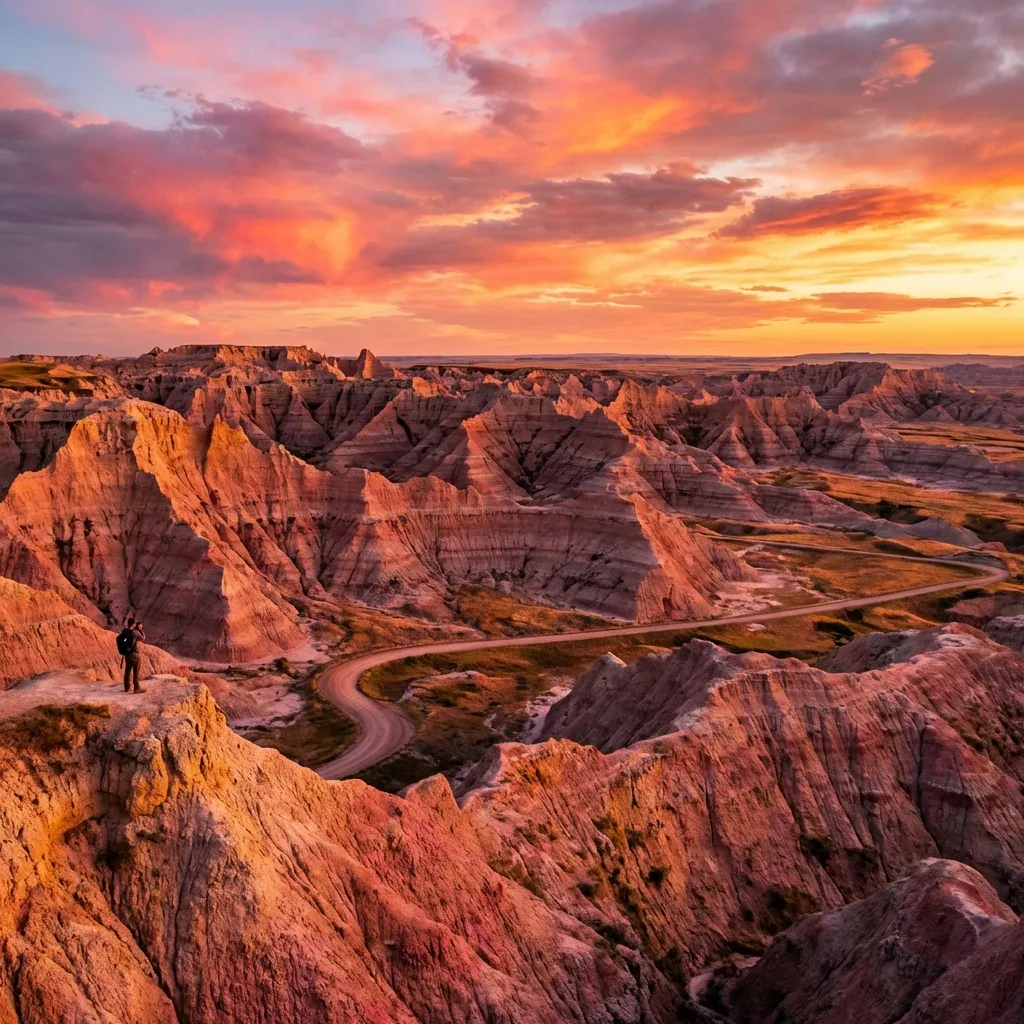




The Badlands also hold one of the world's richest fossil beds from the Oligocene epoch, dating back 23 to 35 million years. Paleontologists have found ancient horses, three-toed rhinos, and saber-toothed cats preserved in the layered sediments. The park sees nearly a million visitors a year. For aerial perspective, our guide to the best helicopter tours over the Badlands compares operators by flight length, and travelers wanting to combine a day at the Badlands with Mount Rushmore should see our Rushmore + Badlands combo tours guide.
What is Badlands National Park?
Badlands National Park is a 244,000-acre protected wilderness in southwestern South Dakota, established as a national monument in 1939 and redesignated as a national park in 1978. The park takes its name from the Lakota people, who called this region "mako sica" (land bad) due to the difficulty of traveling across its rugged, treeless terrain.
The park splits into two units. The North Unit has the Loop Road and all visitor facilities; most people spend their time here. The South Unit lies entirely within the Oglala Lakota Pine Ridge Indian Reservation and is more remote and rarely visited. The landscape was shaped over millions of years as ancient seas, rivers, and wind eroded layered sedimentary deposits into the striped buttes and pinnacles visible today in shades of red, orange, tan, and white.
Entry fee is $30 per vehicle (valid 7 days), according to the National Park Service. An America the Beautiful annual pass covers it if you're visiting other national parks on the same trip.
Badlands Geology & Natural History
The Badlands formations tell a geological story spanning 75 million years. The oldest visible layers, the Pierre Shale at the base, were deposited when a vast inland sea covered the region during the late Cretaceous period. As the sea retreated and the landscape evolved, rivers and streams deposited successive layers of sediment, each representing a different era and climate.
The Yellow Mounds visible at certain overlooks are ancient soils that formed in a subtropical environment 56-34 million years ago. Above them, the Chadron and Brule formations hold the park's fossils, preserved remains of creatures that lived when this was a forested floodplain. The one-inch-per-year erosion rate continually exposes new specimens; rangers find new fossils regularly.
Fossil Discovery
In 2010, a seven-year-old visitor discovered a saber-toothed tiger fossil in the park. By reporting it to rangers rather than removing it, she helped uncover a significant scientific find. If you discover something that might be a fossil, leave it in place and tell a ranger, you could contribute to our understanding of ancient life.
The Ben Reifel Visitor Center features a fossil preparation lab where you can watch paleontologists carefully extract specimens from rock. This ongoing work continues to reveal new species and add to our understanding of prehistoric ecosystems. The park has yielded fossils of ancient horses, rhinoceroses, oreodonts (sheep-like mammals), and predators like the nimravid "false saber-tooth" cats.
Top Attractions & Scenic Drives
Most of the main attractions sit along or directly off the 31-mile Loop Road. The overlooks are roadside pullouts; no hiking required. Here's what's worth the stop.
Badlands Loop Road (Highway 240)
The 31-mile Loop Road is the park's main road, connecting both I-90 entrances (Exit 131 on the northeast end, near Wall on the west) and providing access to every major overlook and trailhead in the North Unit. The drive itself takes 1-2 hours nonstop; plan 3-4 hours if you're stopping at overlooks and doing any short hikes.
Best for: All visitors, photographers, first-time visitors
Big Badlands Overlook
Located near the northeast entrance, this is often the first dramatic viewpoint visitors encounter. The overlook provides sweeping views of the eroded landscape stretching to the horizon, an ideal spot for sunrise photography when the early light paints the formations in golden hues.
Best for: Sunrise photography, first impressions, accessible viewing
Pinnacles Overlook
On the western end of the Loop Road, Pinnacles Overlook offers one of the most expansive views in the park. The overlook features steps leading to a viewing platform where you can see the Wall, the dramatic cliff face separating the upper prairie from the eroded badlands below. This is widely considered the best sunset location in the park.
Best for: Sunset viewing, panoramic photography, picnics
Yellow Mounds Overlook
The brilliantly colored Yellow Mounds are ancient soils (paleosols) that formed millions of years ago in a much different climate. The striking yellow, orange, and purple bands make this one of the most photogenic spots in the park. You can actually walk on the mounds carefully for a closer look.
Best for: Geology enthusiasts, photography, unique colors
Ben Reifel Visitor Center
The park's main visitor center is an essential stop. Beyond the standard exhibits and bookstore, the center features a working fossil preparation lab where you can watch paleontologists extract specimens from rock. Rangers offer educational programs about the park's geology, wildlife, and cultural history. Clean restrooms, water, and air conditioning make this a welcome respite on hot summer days.
Hours: Open year-round (seasonal hours vary)
Fossil Exhibit Trail
This accessible boardwalk trail (0.25 miles) features bronze replicas of fossils found in the park, with interpretive signs explaining what life was like millions of years ago. While not as exciting as seeing actual fossils, it provides excellent educational context for understanding the park's paleontological significance.
Best for: Families, accessibility needs, educational experience
Hiking Trails in Badlands National Park
The car shows you the Badlands; hiking gets you inside them. Trails range from 15-minute accessible boardwalks to a 10-mile full-day route along the base of the Wall. For more hiking in the region, see our guide to things to do in the Black Hills.
Notch Trail
ModerateThe most popular hike in the park. The trail follows a canyon floor, then a wooden ladder gets you up the butte wall. At the top, a narrow ledge leads to the notch, an open viewpoint above the White River Valley. Skip this one if you have young kids or are uncomfortable with heights; the ledge is genuinely exposed.
Door Trail
EasyBeginning on an accessible boardwalk, the trail leads to a natural "door" in the Badlands Wall. Beyond the boardwalk, visitors can explore the eroded landscape freely, this "open hiking" policy allows you to wander among the formations. Great for families with children who want to climb on rocks (carefully!).
Window Trail
EasyA short, accessible boardwalk leading to a natural "window" framing views of an eroded canyon. Perfect for visitors with limited mobility or time, this trail provides classic Badlands scenery with minimal effort.
Saddle Pass Trail
StrenuousShort but steep: loose gravel and clay for 0.25 miles straight up the Wall. At the top you get 360-degree views across the formations and grasslands. Slippery when wet. From the top you can connect to Medicine Root and Castle Trails if you want to keep going.
Castle Trail
ModerateThe park's longest marked trail traverses the base of the Badlands Wall, passing through prairie grassland and eroded formations. Most hikers complete portions of the trail rather than the full out-and-back. The trail connects the Fossil Exhibit and Door/Window parking areas, making shuttle arrangements possible.
Cliff Shelf Nature Trail
Easy-ModerateA surprising pocket of green in the otherwise barren Badlands. This loop trail passes through juniper trees and offers views of the surrounding formations. The boardwalk and stairs make it accessible to the viewpoint, with packed dirt sections beyond.
Hiking Safety Tips
- Bring plenty of water: There is no shade and summer temperatures regularly exceed 100°F.
- Watch for rattlesnakes: They're common in the park, especially in rocky areas.
- Don't climb on buttes: This accelerates erosion and damages the formations.
- Check weather conditions: Flash floods can occur in canyons; avoid hiking during storms.
- Wear sturdy shoes: Loose gravel and clay make many trails slippery.
Wildlife Viewing in Badlands National Park
The Badlands have more wildlife than their appearance suggests. Bison (about 1,200), bighorn sheep, pronghorn, coyotes, and the rarely spotted black-footed ferret all live here. The Sage Creek area on the western side sees the most animals; the Loop Road side has more visitors. For bison viewing closer to the Black Hills, Custer State Park is 100 miles west.
American Bison
A herd of approximately 1,200 bison roams the park's Sage Creek Wilderness area. You'll often see them grazing near the Sage Creek Rim Road or crossing the Badlands Loop Road. Dawn and dusk are the best times for sightings.
Best locations: Sage Creek Rim Road, Roberts Prairie Dog Town area
Bighorn Sheep
Reintroduced to the park in 1964, bighorn sheep can often be spotted on the rocky outcrops and steep buttes. Look for them near the Pinnacles Overlook area and along the cliffs of the Badlands Wall. Binoculars are essential.
Best locations: Pinnacles area, Cedar Pass, rocky outcrops along Loop Road
Prairie Dogs
Roberts Prairie Dog Town near the Sage Creek Rim Road is home to hundreds of these social rodents. Watching them pop up from their burrows and "bark" warning calls is entertaining for all ages. They're most active in morning and evening.
Best locations: Roberts Prairie Dog Town, Burns Basin Overlook
Black-Footed Ferrets
Once thought extinct, these rare predators were reintroduced to the Badlands in 1994 and now have a small but stable population. They're nocturnal and hunt prairie dogs, making sightings extremely rare but possible at night in the Conata Basin area.
Best locations: Conata Basin (nighttime only)
Other wildlife you may encounter includes pronghorn antelope, mule deer, coyotes, swift foxes, and numerous bird species including golden eagles, prairie falcons, and burrowing owls. Remember to maintain at least 100 feet distance from all wildlife and never approach or feed animals.
Scenic Drives in Badlands National Park
The Badlands are perfectly suited for scenic driving, with dramatic viewpoints accessible directly from the road. Two main routes offer distinctly different experiences.
Badlands Loop Road (Highway 240)
This 31-mile paved road is the main scenic drive and provides access to all major overlooks, trailheads, and the visitor center. The road connects to I-90 at both ends, making it easy to incorporate into your travel route. Allow 1-2 hours for a basic drive-through, or 3-4 hours if you plan to stop at overlooks and take short hikes.
Key Stops Along the Loop:
- Big Badlands Overlook: First major viewpoint from the northeast entrance, excellent for sunrise
- Door, Window, Notch Trailhead: Access to three popular trails from one parking area
- Ben Reifel Visitor Center: Main facility with exhibits, fossil lab, and restrooms
- Yellow Mounds Overlook: Brilliantly colored ancient soils
- Pinnacles Overlook: Best sunset location with expansive views
Sage Creek Rim Road
This unpaved road branches off from the Loop Road near the Pinnacles entrance and travels along the northern boundary of the wilderness area. The road is rougher but passable for most vehicles in dry conditions, and offers the best opportunities for viewing bison, prairie dogs, and experiencing the park's more remote character.
Highlights:
- Roberts Prairie Dog Town: Large colony visible from pullouts along the road
- Sage Creek Campground: Free primitive camping at the end of the road
- Bison herds: Frequently seen grazing in the grasslands along this route
Best Time to Visit Badlands National Park
The park is open year-round. The two biggest practical concerns are heat (summer highs regularly top 100°F with almost no shade) and crowds (thin outside June through August). For a broader road trip that also includes the Black Hills or other regions, compare the tradeoffs in our best time to visit South Dakota guide. Here's how the Badlands seasons actually break down.
Spring (Mid-April to Mid-May) - Recommended
Rangers consider this the best time to visit. The prairie turns green with new growth, wildflowers begin blooming, and baby animals appear. Temperatures are comfortable (50-70°F), crowds are minimal, and the soft spring light creates excellent photography conditions.
- Pros: Green prairies, wildflowers, baby wildlife, fewer crowds, mild temperatures
- Cons: Occasional rain, unpredictable weather, some facilities may have limited hours
Summer (June to August)
Summer brings the largest crowds and hottest temperatures, with daily highs regularly exceeding 100°F. All facilities are open, ranger programs are in full swing, and longer days allow for extended exploration. However, the heat makes hiking uncomfortable and the prairie turns brown.
- Pros: All facilities open, ranger programs, long daylight hours, campgrounds full of activity
- Cons: Extreme heat, largest crowds, brown prairie, challenging hiking conditions
Fall (September to October) - Recommended
Fall offers another excellent window for visiting. The summer crowds disperse, temperatures cool to comfortable levels (50-70°F), and the changing angle of sunlight creates dramatically different colors on the formations. Wildlife becomes more active as animals prepare for winter.
- Pros: Beautiful light, cooler temps, fewer crowds, active wildlife, great photography
- Cons: Some facilities begin closing, shorter days, weather can be unpredictable
Winter (November to March)
Winter offers unparalleled solitude, only 50-100 visitors per day explore the park. Snow on the formations creates striking contrast, and wildlife viewing can be excellent as animals are easier to spot against the white landscape. However, cold temperatures (often below freezing), limited services, and potentially hazardous road conditions require careful preparation.
- Pros: Dramatic solitude, snow photography, easy wildlife spotting, no crowds
- Cons: Limited services, cold temperatures, possible road closures, short days
Planning Your Badlands Visit
Most people visit the Badlands as a day trip from the Black Hills, about 75 miles east. Here's how to size the time depending on what you want to do.
Half-Day Visit (3-4 hours)
Drive the Badlands Loop Road with stops at 5-6 major overlooks. Take the short Door or Window Trail. Quick stop at the Ben Reifel Visitor Center. This provides a solid introduction but leaves you wanting more.
Full-Day Visit (6-8 hours)
Complete the Loop Road at a leisurely pace. Hike 2-3 trails including the Notch Trail. Spend time at the visitor center and fossil exhibits. Drive a portion of Sage Creek Rim Road for wildlife viewing. Catch either sunrise or sunset at a scenic overlook.
Multi-Day Visit (2+ days)
Camp in the park to experience both sunset and sunrise. Complete all major trails. Attend ranger programs and night sky events. Explore Sage Creek Rim Road thoroughly. Visit the South Unit if interested in the Lakota cultural experience.
What to Bring
- Plenty of water (1 gallon per person minimum)
- Sunscreen and sun hat
- Layers for temperature changes
- Sturdy hiking shoes
- Binoculars for wildlife viewing
- Camera with charged batteries
- Snacks and food (limited dining options)
- Park map (cell service is unreliable)
How to Get to Badlands National Park
Badlands National Park is located in southwestern South Dakota, easily accessible from Interstate 90. The park has three entrances, each serving different travel routes.
Driving Distances
Park Entrances
Northeast Entrance (from I-90 Exit 131)
Best for visitors coming from the east. This entrance puts you near Big Badlands Overlook and the Door/Window/Notch trailheads first, with the visitor center later in your drive.
Pinnacles Entrance (from Wall, via Highway 240)
Best for visitors coming from Rapid City or the Black Hills. Takes you past Pinnacles Overlook first and through the western portion of the park toward the visitor center.
Interior Entrance (via Highway 44)
A scenic alternative route from the south. Takes Highway 44 to Highway 377 in Interior. Less common but offers a different approach to the park.
Entrance Fees (2026)
- Private Vehicle: $30 (valid for 7 days)
- Motorcycle: $25 (valid for 7 days)
- Per Person (walk-in/bicycle): $15 (valid for 7 days)
- Annual Pass: $55 (Badlands only) or $80 (America the Beautiful - all national parks)
Where to Stay Near Badlands National Park
Lodging options near the Badlands range from in-park camping and cabins to hotels in nearby towns. Your choice depends on whether you want to experience the park after dark or prefer more amenities. For ranked properties by distance and guest ratings, see our guide to hotels near Badlands National Park.
In-Park Camping
Cedar Pass Campground
Located near the Ben Reifel Visitor Center, this is the park's main campground with 96 sites. Accepts reservations (recommended in summer). Has restrooms but no showers. No campfires allowed.
Open: April through October | $28/night
Sage Creek Campground
Free primitive camping on a first-come, first-served basis. 22 sites with pit toilets but no water. Bison often wander through. 18-foot trailer limit (except horse trailers). Perfect for solitude seekers.
Open: Year-round | Free
Cedar Pass Lodge
The only lodging within the park offers 27 cabins with air conditioning and private bathrooms. The on-site restaurant serves breakfast, lunch, and dinner (try the Indian Taco). Reservations fill quickly for summer dates, book months in advance.
Open: April through October | Starting at $228/night
Wall, South Dakota
The town of Wall, just north of the Pinnacles entrance, offers several motels including Days Inn, Best Western, and Americas Best Value Inn. Wall is famous for Wall Drug, a must-stop roadside attraction with donuts, coffee, and quirky shops. Compare Wall and gateway options in our hotels near Badlands rankings.
Distance: Adjacent to park's west entrance
Rapid City
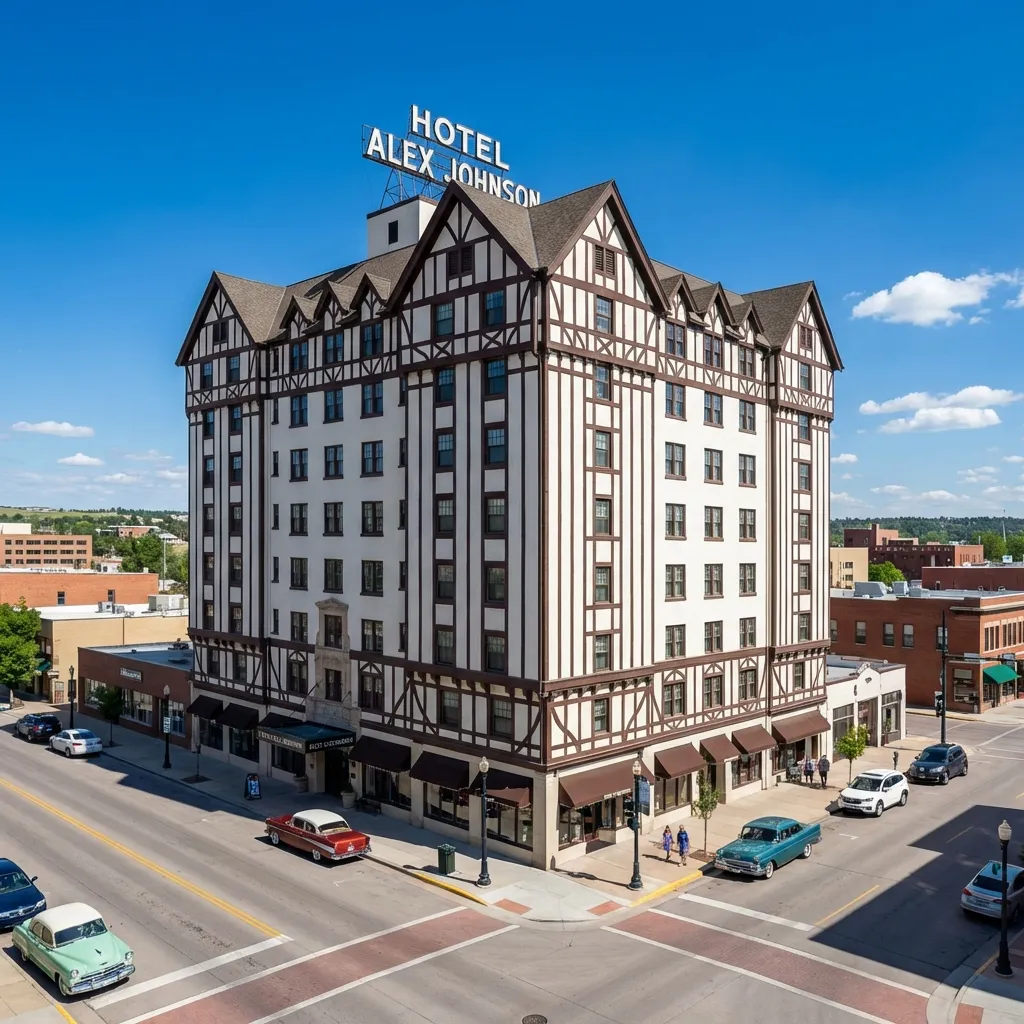
Rapid City hotels offer the most lodging options, from budget motels to upscale properties like the historic Alex Johnson. The city also has restaurants, shopping, and serves as a base for exploring other Black Hills attractions.
Distance: 75 miles (1 hour) from park
Attractions Near Badlands National Park
The Badlands are just one piece of the incredible Black Hills region. Consider combining your visit with these nearby attractions for a complete South Dakota experience. See our complete guide to things to do in the Black Hills for more ideas.
Mount Rushmore
The iconic carved faces of four presidents are 90 miles (1.5 hours) from Badlands. Combine both in a full day or visit on separate days.
View Mount Rushmore tours guide →Custer State Park
A 71,000-acre state park with bison herds, scenic drives, and incredible hiking. Pair with Badlands for an ultimate wildlife viewing experience.
View Custer State Park Guide →Wind Cave National Park
One of the world's longest caves featuring rare boxwork formations. Great underground complement to the Badlands' above-ground landscapes.
View Wind Cave Guide →Wall Drug
The legendary roadside attraction with free ice water, 5-cent coffee, famous donuts, and endless quirky shops. A South Dakota tradition since 1931.
Located in Wall, SD (adjacent to park)
Minuteman Missile NHS
Preserved Cold War missile silo and control center just minutes from Badlands. Book the underground tours well in advance, they're limited to 6 people and fill quickly.
Located on I-90 near the park's east entrance
Deadwood
Historic Wild West town with gaming, history, and entertainment. About 2 hours from Badlands, best as a multi-day trip addition.
View Deadwood Guide →Badlands Visitor Tips
Photography Tips
- Best light: The "golden hours" around sunrise and sunset create dramatic shadows and warm colors on the formations.
- Sunrise spots: Big Badlands Overlook, Door Trail area
- Sunset spots: Pinnacles Overlook, Yellow Mounds Overlook
- Night photography: The park has excellent dark skies for Milky Way shots. No light pollution for miles.
Food & Dining
Options within the park are extremely limited. The Cedar Pass Lodge restaurant (open April-October) serves breakfast, lunch, and dinner. Their Indian Taco is a regional specialty. Wall Drug offers extensive dining options including a cafeteria and bakery famous for its donuts.
Tip: Bring snacks, sandwiches, and plenty of water. There are picnic areas throughout the park.
Stargazing & Night Sky Programs
The Badlands have some of the darkest skies in the Midwest. The park runs night sky programs in spring, summer, and fall at the Cedar Pass area, with rangers, telescopes, and constellation walks. The annual Badlands Astronomy Festival in summer draws both amateur and professional astronomers.
Tip: Even without a program, drive to any overlook after dark; the Milky Way is visible on clear nights.
Important Reminders
- Cell service is unreliable: Download maps and information before arriving.
- Gas up before entering: No gas stations in the park; nearest are in Wall or Interior.
- Don't remove fossils: It's a federal offense to collect fossils, rocks, or plants.
- Stay off the buttes: Climbing on formations accelerates erosion and is prohibited.
- Wildlife distance: Maintain at least 100 feet from all wildlife.
Badlands Tours & Day Trips
Guided drives, sunset photo trips, and combo tours from Rapid City.

Private Tour of the Badlands with Local Experts
The Badlands have many secrets and requires a seasoned guide to explain and reveal them. GeoFunTrek Tours' guides are local experts with decades of experience. We have no seasonal-guides, part-time guides or trainee-guides. This is a family-owned business and all tours are conducted by family members: Cindy, Christopher and John Esposti. We have the knowledge and skills to make your day one to remember. You will always get the A-Team when you tour with GeoFunTrek Tours! All tours are PRIVATE TOURS, exclusive to the group booking the tour, and no additional guests will be included. Children must be accompanied by one adult. Children 3 years and younger are free and will have their own seat. Children's car seats must be supplied by family members when required. Our vehicles are SUV's and a van may be rented for larger groups. Please enquire about vehicles if you have any questions. This tour is great for 3-generation families with Children, multiple couples and groups of friends.

Shared Badlands and Wall Drug Store Experience
What makes this Badlands and Wall Drug Store tour unique is the depth of knowledge and storytelling it offers. It's not just a scenic drive, but a fully narrated experience that brings the Badlands and prairie areas to life with abundant information and captivating stories. This ensures a richer and more engaging experience compared to self-guided tours or those with less historical and cultural context, especially since it spans a substantial 7-8 hours.

Badlands Premium Hard Top Van Tour
This tour includes all of the Badlands North Park and Wall Drug with option for Minuteman Missile Historic Site and Delta 9.

Wildlife Biologist’s Field Expedition: The Badlands Uncovered
My XO Adventures believes The Badlands can be a wonderful experience for your senses, and there are a lot of stories to be told about the park. It's also abundant with wildlife, but you've got to know where to go. We have walked, crawled, climbed, and taken the back roads through the park to find places we know you'll love. This is not a strenuous journey and is suited for all ages. We encourage you to check out our Google Reviews for My XO Adventures online to see what kind of experience you'll enjoy by coming along with us. We take care of the details and may even have some surprises for you along the way. Every day is different, and we love what we do. We explore the Badlands, not just tour them. Learn about the history, wildlife, fossils, geological shapes, and sacred places. Commonly missed and extraordinary places are where we go. We do what we want, when we want, where we want!
Prices and availability provided by Viator. We earn a commission on bookings, at no extra cost to you.
Frequently Asked Questions About Badlands National Park
What is Badlands National Park famous for?
Badlands is known for its eroded buttes, pinnacles, and spires formed from layered sedimentary deposits. It also holds one of the world's richest fossil beds from the Oligocene epoch (23-35 million years old), with finds including ancient horses, saber-toothed cats, and three-toed rhinos. The park has a free-roaming bison herd of about 1,200, bighorn sheep, and the rarely seen black-footed ferret.
How long should I spend in Badlands National Park?
Most visitors spend 3-4 hours driving the Loop Road and stopping at overlooks. For hiking and wildlife, plan a full day. Overnight camping lets you catch the sunset and sunrise light on the formations and take advantage of genuinely dark skies; the Milky Way is visible most clear nights.
What are the best hiking trails in Badlands?
The Notch Trail is the most popular; it includes a wooden ladder climb and an exposed ledge at the top with views over the White River Valley. Not suitable for young children or those uncomfortable with heights. Door and Window Trails are easy, accessible boardwalk options. Castle Trail is the longest at 10 miles. Saddle Pass is short but steep with 360-degree views from the top of the Wall.
Can you see wildlife in Badlands National Park?
Absolutely! The park is home to approximately 1,200 bison, bighorn sheep, pronghorn antelope, prairie dog towns, coyotes, and the rare black-footed ferret. The best wildlife viewing is early morning or late evening along the Badlands Loop Road and Sage Creek Rim Road. Bring binoculars for the best experience.
What is the best time to visit Badlands?
Park rangers recommend mid-April through mid-May for fewer crowds, green prairies, and comfortable temperatures. Fall (September-October) provides beautiful light and cooler weather. Summer is hot and crowded but offers the most services and ranger programs. Winter provides dramatic solitude with only 50-100 visitors per day, though services are limited.
Is Badlands National Park worth visiting?
Yes. The formations are genuinely unlike anything else in the region, and the experience improves a lot if you go beyond just driving through. Hiking even one trail, catching a ranger program, or driving Sage Creek Rim Road at dusk for wildlife adds real depth. The park is 75 miles from Mount Rushmore tours and pairs well with a day at Custer State Park.
How far is Badlands from Mount Rushmore?
Badlands National Park is approximately 90 miles (1.5 hours) from Mount Rushmore. From Rapid City, it's about 75 miles (1 hour) to the park's western entrance near Wall. Many visitors see both attractions in a multi-day Black Hills trip. For lodging closest to the park, see hotels near Badlands National Park.
Are there camping options in Badlands?
Yes, the park has two campgrounds. Cedar Pass Campground ($28/night) takes reservations and is near the visitor center with 96 sites. Sage Creek Campground is free, first-come first-served, with 22 primitive sites where bison often wander through. Backcountry camping is also permitted with a free permit from the visitor center.
Plan Your Badlands Adventure
Badlands National Park pairs well with a Black Hills trip. Drive the Loop Road at sunset, hike into a canyon, or watch bison graze against the spires.